Beverage Clarification Enzyme Supplier for RTD Manufacturing
Enzymeforbeverages is an enzyme supplier for beverage manufacturing teams that need cleaner liquid, tighter process control, and fewer clarification delays on high-speed ready-to-drink lines.
For juice drinks, teas, plant-based beverages, functional drinks, coffee beverages, and flavored RTD formulations, haze and suspended solids can create real production cost: slow filtration, tank hold time, sediment complaints, inconsistent appearance, and reformulation work. Enzymeforbeverages helps R&D, process, and procurement teams select clarification enzyme systems matched to the substrate, process window, and commercial target.
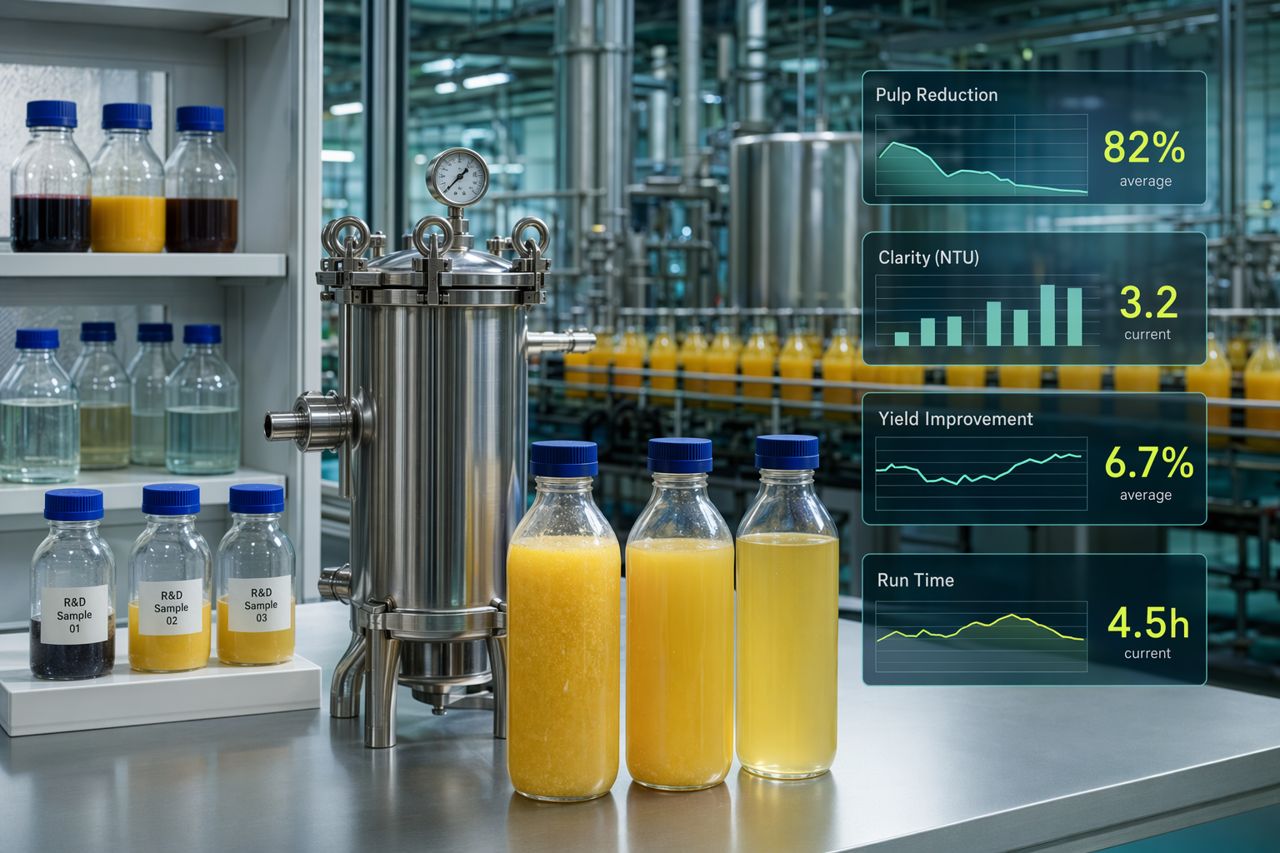
Production outcome: lower haze load, controlled pulp carryover, improved filtration behavior, cleaner separation, and repeatable finished-product clarity.
Built for Beverage Plants Managing Haze, Pulp, and Filtration Bottlenecks
Clarification is not just a visual target. In RTD beverage production, it affects line planning, filter life, batching repeatability, sediment risk, and the consumer’s first impression of the bottle.
Enzymeforbeverages clarification enzyme solutions support factories working through:
- Persistent haze after extraction, blending, or thermal processing
- Pulp and fine solids carryover into downstream filtration
- Slow clarification tanks or inconsistent settling behavior
- Premature filter loading and reduced filtration throughput
- Sediment formation during storage or distribution
- Variation between fruit lots, botanical extracts, concentrates, or plant-derived bases
- Mouthfeel targets that require clarity improvement without stripping the product profile
We focus on practical plant outcomes: clarity, viscosity reduction, extraction yield, filtration efficiency, mouthfeel control, and formulation repeatability.
Faceless Explainer Video: Clarification Without Slowing the Line
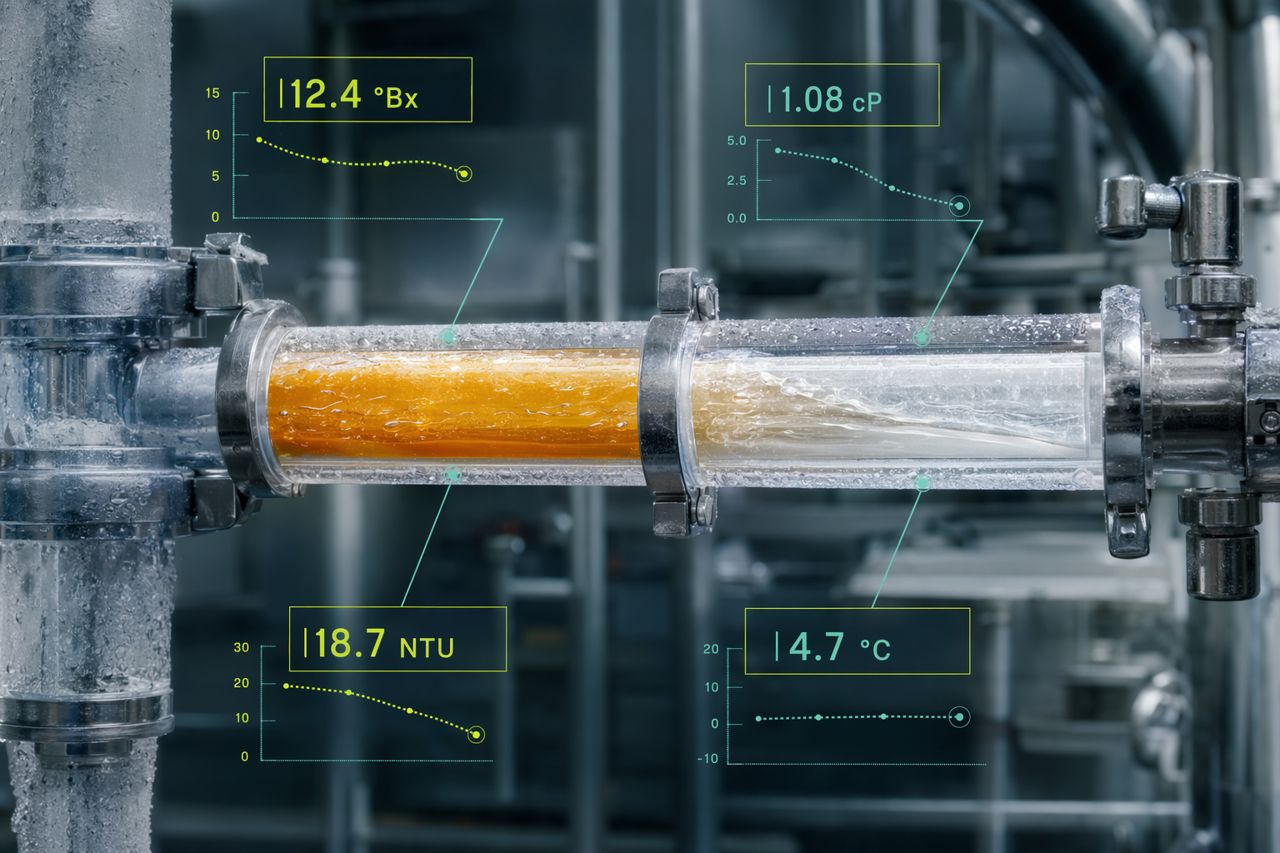
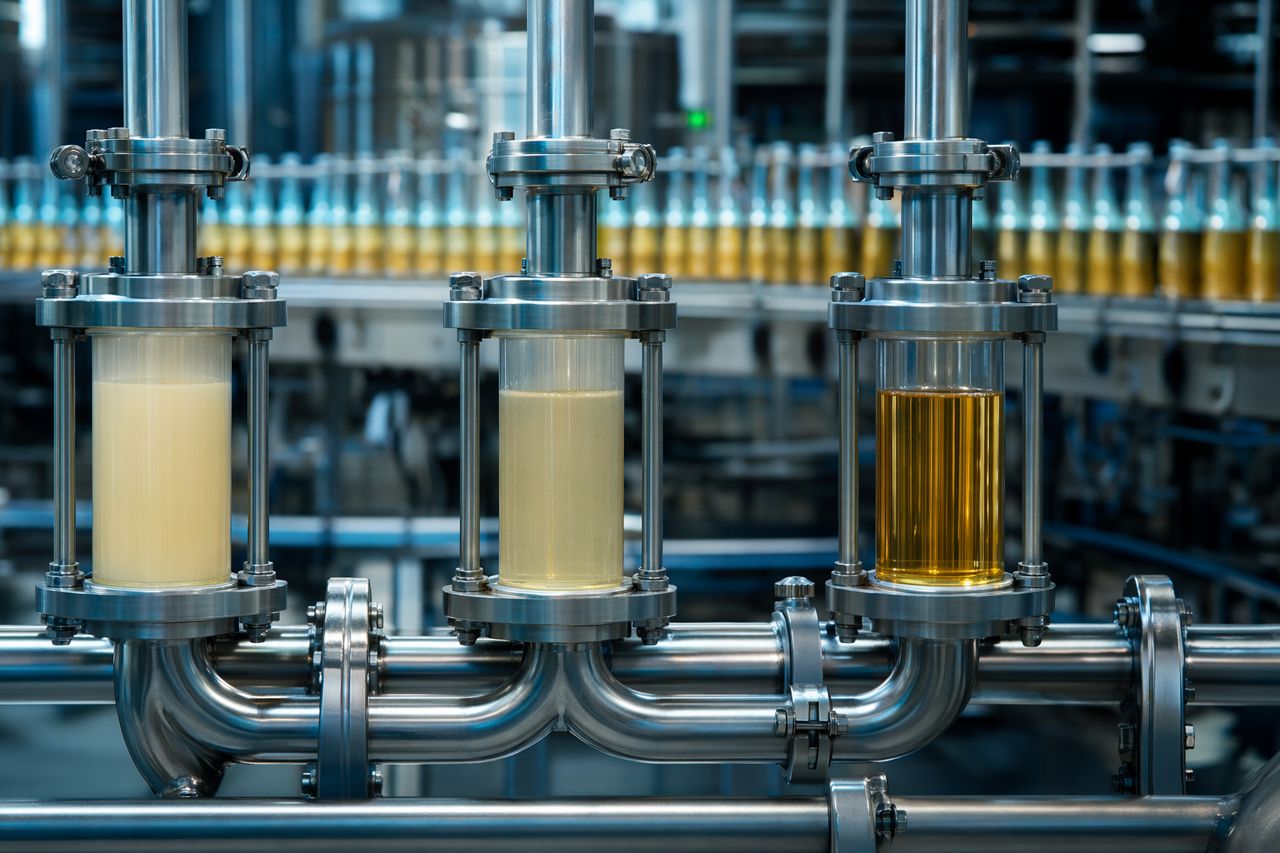
Embed the one-minute Enzymeforbeverages faceless explainer video here. Visual language: macro liquid clarity transitions inside transparent tubing, Brix, viscosity, turbidity, and temperature overlays, stainless beverage process equipment, synchronized bottle movement, and luminous enzyme-effect particles resolving haze into clean color.
Where Clarification Enzymes Fit in RTD Production
Enzymeforbeverages supports clarification strategy across the beverage process, from raw material preparation through final filtration planning.
Fruit and Juice-Based RTDs
Pectin-rich fruit systems can increase viscosity, slow separation, and drive haze. Clarification enzymes help break down structure-forming components so the liquid flows, settles, and filters more predictably.
Typical goals:
- Improve juice yield from fruit or concentrate preparation
- Reduce viscosity before clarification or filtration
- Lower haze-forming material before bottling
- Improve brightness without excessive processing intensity
- Stabilize appearance across variable fruit inputs
Tea, Botanical, and Functional Beverages
Botanical extracts, tea solids, proteins, polysaccharides, and fine particles can create haze instability, especially after blending with acids, minerals, sweeteners, or functional ingredients.
Typical goals:
- Reduce fine suspended material before final filtration
- Improve cold-fill or hot-fill visual consistency
- Reduce batch-to-batch turbidity swings
- Improve processability without flattening flavor identity
Plant-Based and Hybrid RTD Formulations
Oat, rice, grain, nut, and seed-derived systems often bring viscosity and suspended solids challenges. Enzyme-supported process design can improve flow behavior and help R&D control the final texture.
Typical goals:
- Reduce excessive thickness during processing
- Control mouthfeel while improving liquid handling
- Support smoother separation or filtration
- Improve formulation repeatability during scale-up
What Enzymeforbeverages Helps You Optimize
Clarity and Turbidity Control
Enzymeforbeverages helps factories select enzyme approaches that reduce haze-forming structures before they create downstream instability. The target is not simply a clearer lab sample — it is finished beverage consistency at commercial scale.
Viscosity Reduction
High viscosity can slow pumping, heat transfer, filtration, and tank turnaround. Enzyme-supported viscosity reduction can improve line efficiency while preserving the intended sensory profile.
Filtration Performance
Clarification enzymes can reduce the solids and structural load reaching filtration. This supports better flow behavior, more predictable filter change planning, and fewer production interruptions caused by filter blockage.
Extraction Yield
For fruit, botanical, and plant-derived inputs, the right enzyme system can help release more soluble material and improve process efficiency before clarification.
Sediment Risk Reduction
Visible settling in finished RTD beverages creates quality concerns and customer complaints. Enzymeforbeverages helps reduce upstream drivers of sediment formation so the finished product holds its visual standard longer.
Formulation Repeatability
R&D teams need enzyme options that work across raw material variation, not only ideal pilot batches. Enzymeforbeverages supports screening logic and plant-fit recommendations so commercial runs stay closer to target.
Practical Enzyme Selection for Commercial Beverage Lines
Enzymeforbeverages does not treat clarification as a one-size-fits-all ingredient decision. We evaluate the beverage matrix, processing constraints, and finished-product target before recommending an enzyme path.
Key selection factors include:
- Beverage type and raw material source
- Pectin, starch, protein, fiber, or suspended solids behavior
- Desired clarity level and acceptable mouthfeel change
- Process temperature range and hold-time reality
- pH profile and formulation constraints
- Existing separation, centrifugation, or filtration setup
- Thermal process and finished-product stability goals
- Label, regulatory, and procurement requirements
The result is a recommendation designed for factory adoption — not just bench-top clarity.
Clarification Enzyme Options by Process Challenge
| Production challenge | Enzyme strategy focus | Commercial value |
|---|---|---|
| Fruit haze and thick pulp | Pectin-focused breakdown | Brighter liquid, reduced viscosity, improved separation |
| Slow filtration | Structural solids reduction | Better flow behavior and fewer bottlenecks |
| Fine sediment after filling | Upstream haze precursor reduction | Cleaner finished appearance and lower complaint risk |
| Botanical extract haze | Matrix-specific clarification support | More consistent visual quality across batches |
| Plant-based beverage thickness | Controlled viscosity adjustment | Improved handling and mouthfeel repeatability |
| Variable raw material lots | Process-tolerant enzyme selection | More predictable scale-up and batch consistency |
Why RTD Beverage Plants Choose Enzymeforbeverages
Technical Without the Guesswork
You get direct, process-focused guidance for beverage clarification — not generic enzyme listings. Enzymeforbeverages connects enzyme function to production outcomes your team can measure on the line.
Designed for Scale-Up
Pilot clarity is useful, but commercial reliability matters more. We help translate trials into plant-ready processing decisions.
Procurement-Friendly Supply Conversation
Enzymeforbeverages supports practical sourcing discussions: application target, production volume, lead time, documentation needs, and packaging preferences.
Built Around Your Beverage Target
Some products need brilliant clarity. Others need controlled cloud, soft mouthfeel, or natural visual character. We help align enzyme selection with the product brief instead of forcing a single aesthetic.
Request a Quote for Beverage Clarification Enzymes
Tell us what you produce, what clarification issue is slowing the line, and what finished-product appearance you need. Enzymeforbeverages will respond with a commercially practical enzyme supply recommendation for your RTD beverage process.
Information that helps us quote faster
- Beverage type and main raw materials
- Current haze, pulp, viscosity, sediment, or filtration issue
- Process stage where enzyme treatment is planned
- Approximate production volume or batch profile
- Target finished-product clarity or mouthfeel
- Current separation or filtration equipment
- Required documentation or compliance expectations
Request a quote using the on-site contact form and Enzymeforbeverages will help identify the right clarification enzyme path for your beverage line.