Enzymes for Botanical Beverage Extraction
Enzymeforbeverages supplies extraction enzymes to manufacturers of herbal, floral, root, berry and functional botanical drinks, and to extract producers who sell bases to beverage brands. The business case is simple: more soluble material out of the same raw botanical, a base that flows and filters, and less sediment in the finished drink.
Tell us the botanical, your extraction method, the volume and the destination, and we quote a matched enzyme blend with a trial plan.
What extract and drink plants report
Producers of goji puree show the commercial target clearly: a composite enzyme blend is used to raise output, release more of the berry's polysaccharides into the liquid and cut the sediment that forms afterwards. That is three wins from one treatment step: more sellable liquid per tonne of fruit, a stronger functional story on the label, and less product lost to settling. The approach is a blend built for one raw material, not a single general enzyme.
The harder problem is usually not the enzyme but getting it to work in an existing plant. Herbal extractors, juice processors and functional food makers describe the same three failures: they cannot match the enzyme type to their current process, cannot repeat lab results at production scale, and cannot settle on the right dose and conditions. Many end up calling the enzyme ineffective when the trial design was the real gap. Suppliers that do this well now offer several specifications of a blend, for example rhamnosidase with cellulase and pectinase for plant extraction and juice, together with a small-scale trial protocol, which shortens process verification.
| Buying question | Single general enzyme | Blend matched to the botanical |
|---|---|---|
| Fit with an existing line | Trial and error on site | Specification chosen for the raw material and process |
| Scale-up from bench | Often fails to repeat | Comes with a small-scale trial protocol |
| Outcome measured | Usually yield only | Yield, dissolved actives and sediment together |
Selection checklist before a trial: 1. Name the commercial target first: yield, dissolved actives, sediment, or all three. 2. Ask for more than one blend specification so the trial compares options on your material. 3. Run the small-scale protocol on your own raw material before committing a production batch. 4. Check the stored product for sediment, not only the fresh extract.
Where botanical extraction enzymes pay off
Herbal and floral infusions
Release soluble compounds from leaves, flowers and aromatic herbs while reducing the drag from fine particles and soluble fibre.
Root, bark and dense materials
Heavy slurries and uneven extraction are common. Targeted blends lower viscosity and improve separation, so a lab concept can run on the plant.
Berry purees and fruit-botanical blends
Purees that are thick, settle in storage or hold back soluble solids benefit from blends matched to the fruit.
Enzyme groups we quote
- Pectin-focused systems for haze, viscosity and clarification
- Cellulase and hemicellulase systems for release from fibrous botanicals
- Starch-converting support where roots or grains add heaviness
- Debittering and glycoside-acting enzymes where the application calls for them
- Custom blends for multi-botanical formulas
What we review for an extraction project
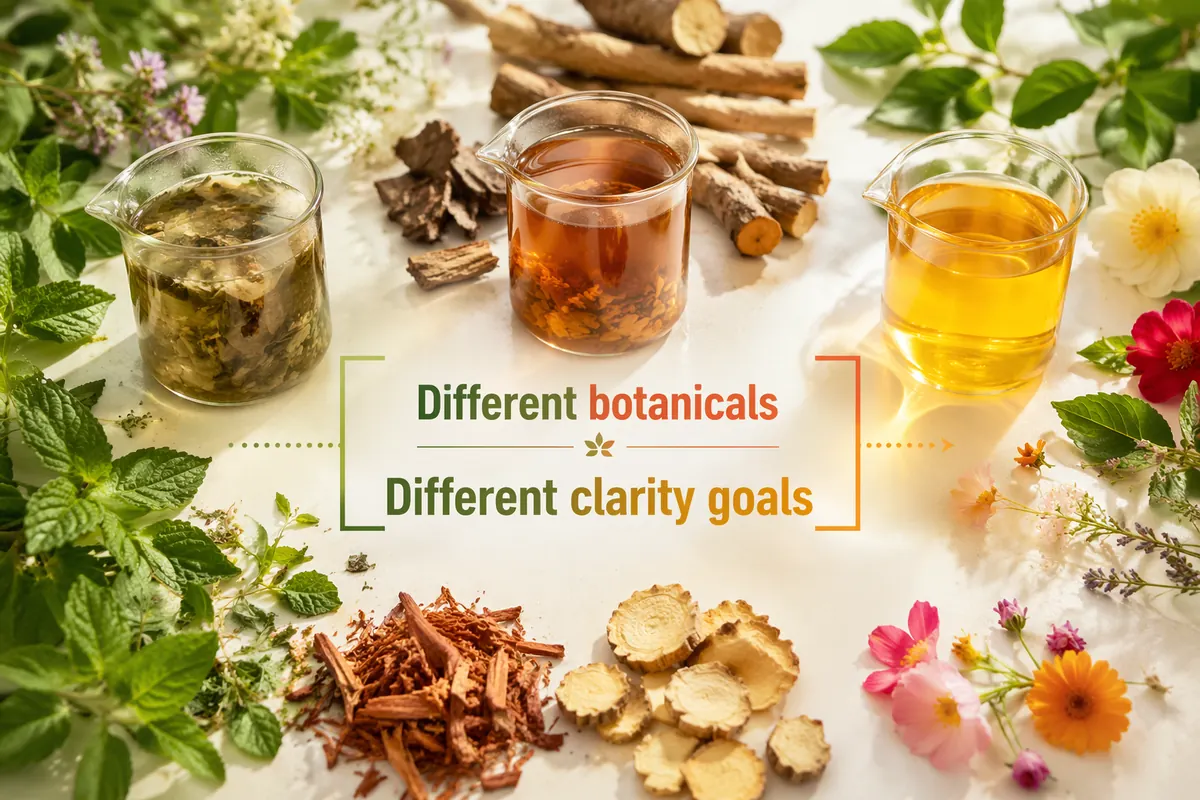
- Botanical type, cut size and ingredient format
- Current extraction method, temperature and hold time
- Target appearance of the finished beverage: bright, lightly cloudy or opaque
- Current problem: yield, viscosity, haze or sediment
- Filtration or separation equipment and heat treatment
- Production volume and launch timeline
- Destination country, and whether the extract is for your own drinks or sold to other brands
Request a quote
Tell us what you extract, the problem you want solved and the volume you need. Enzymeforbeverages replies with a matched enzyme blend, a trial plan and a quote for trial and production quantities.


