Enzyme Supply for RTD Beverage Plants
Enzymeforbeverages supplies enzymes to ready-to-drink beverage plants, co-packers and the distributors who serve them. We quote trial lots, scale-up quantities and repeat production supply for each application, so the enzyme you validate on the bench is the one that arrives for production.
Send us the drink, the problem, the quantity and the destination. Pricing and pack options are quoted per order.
What plants are asking enzymes to fix
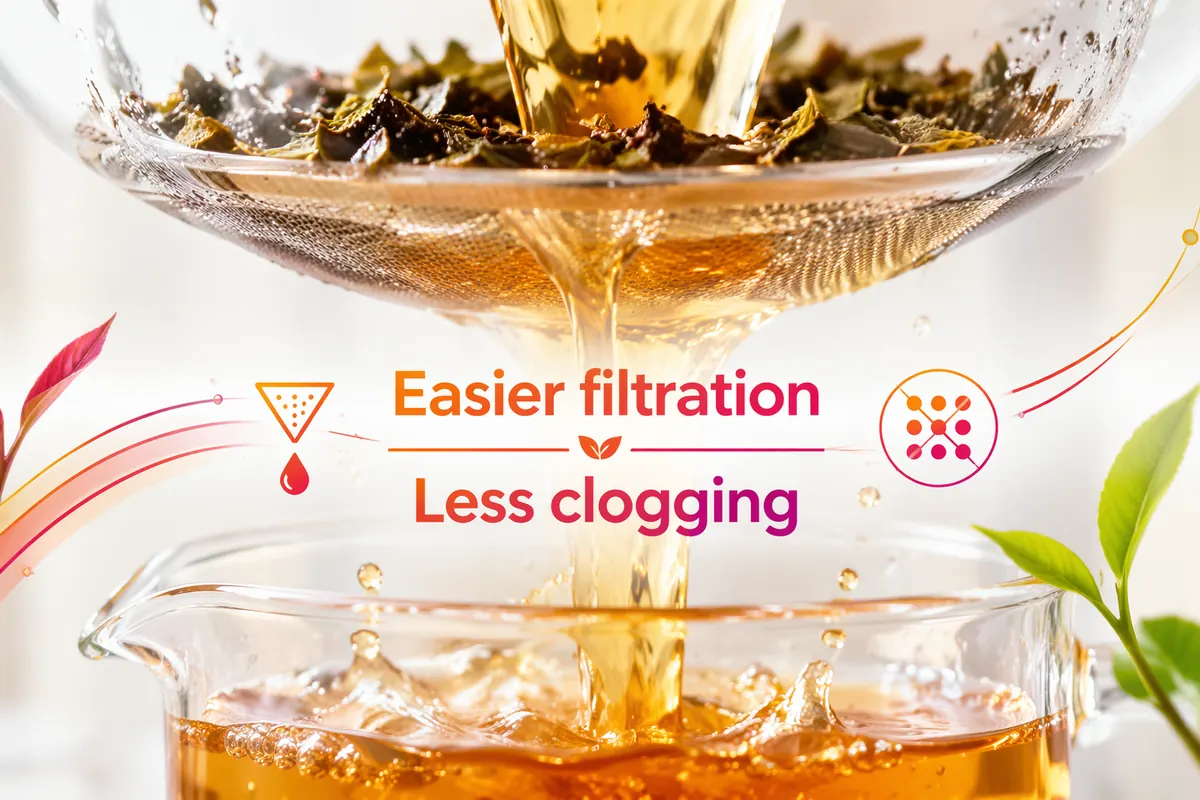
Two complaints come up again and again from vegetable juice and drink concentrate plants: the base is so viscous it will not filter, and the product settles and separates into layers. Spinach concentrate and vegetable purees are typical cases, where thickness blocks the filter and the bottled product still shows sediment. Enzyme makers now answer this with a dedicated blend per product line rather than one general enzyme, aimed at filterability and at stopping the layer separation.
The same settling problem decides whether a concentrate can be sold on to business customers at all. Mung bean drink concentrate makers use a dedicated enzyme to stop sediment and layering, so their trade buyers are willing to hold the product in stock. For a plant selling concentrate or bases to other manufacturers, a product that separates on the shelf is a product the customer will not reorder.
| Symptom on the line | What it costs the plant | What to tell us |
|---|---|---|
| Base too thick to filter | Slow filter runs, blocked media, held tanks | Raw material, solids level, filter type |
| Layering or sediment in storage | Rework, complaints, trade buyers who stop stocking | Storage time and temperature, pack format |
Common mistakes on these lines: 1. Running one general enzyme across every vegetable and bean base instead of a blend matched to each product. 2. Judging the trial only on filter speed when the real complaint from buyers is sediment after storage. 3. Scaling up before checking the stored product, not just the fresh batch.
Supply for trials, scale-up and production
Trial quantities
Plant-relevant quantities to test the enzyme under your real time, temperature, pH and separation conditions, so the trial result supports the scale-up decision.
Scale-up supply
Larger lots for the first production windows, with handling and storage notes for your team.
Repeat production and resale
Recurring supply planning for validated formulas, for your own plant or for customers you resell to.
Enzyme groups we match to RTD bases
- Pectinase systems where pectin drives haze, high viscosity or slow clarification in fruit and vegetable bases
- Cellulase and hemicellulase systems for plant tissue breakdown, liquid release and lower viscosity
- Amylase systems where starch affects viscosity, filtration or heat transfer in grain, oat and rice drinks
- Protease systems where proteins drive haze, sediment or mouthfeel problems in plant protein and tea-milk drinks
- Product-specific blends for bases that need more than one enzyme activity
What to include in your quote request
- Beverage or base type and the main raw material
- Main target: filtration, settling, viscosity, yield, clarity or mouthfeel
- Process flow from raw material to filling, with temperatures and hold times
- Batch size and expected monthly volume
- Storage conditions and shelf-life target
- Destination country, and whether the enzyme is for your plant or for resale
Request a quote
Send your process target through the inquiry form below. Enzymeforbeverages reviews the application and replies with a matched enzyme route and a quote for trial and production quantities.


