Filtration Bottlenecks in Tea and Botanical Drinks: Root Causes Before Buying More Hardware
When an RTD tea or botanical line slows down at filtration, the first instinct is often mechanical: add filter area, change media, increase pressure, or schedule more frequent changeovers. Sometimes that helps. Often, it only treats the symptom.
For an R&D or process manager, the better question is upstream: what is the liquid asking the filter to remove?
At Enzymeforbeverages, we work as an enzyme supplier for beverage manufacturing with a focus on production outcomes: clearer liquid, controlled mouthfeel, lower process viscosity, better extraction yield, and repeatable filtration behavior from batch to batch.
Filtration bottlenecks usually start before the filter skid.
The Real Load on a Beverage Filter
In tea, herb, fruit-botanical, spice, and plant infusion systems, filter resistance can come from several overlapping sources:
- Fine insoluble solids from leaves, stems, roots, peels, seeds, or powders
- Plant cell wall debris released during extraction, milling, or high-shear mixing
- Pectin-rich colloids that form haze and hold water
- Starch or beta-glucan contributions from botanical blends, grains, or added plant materials
- Protein-polyphenol complexes that become visible as turbidity over time
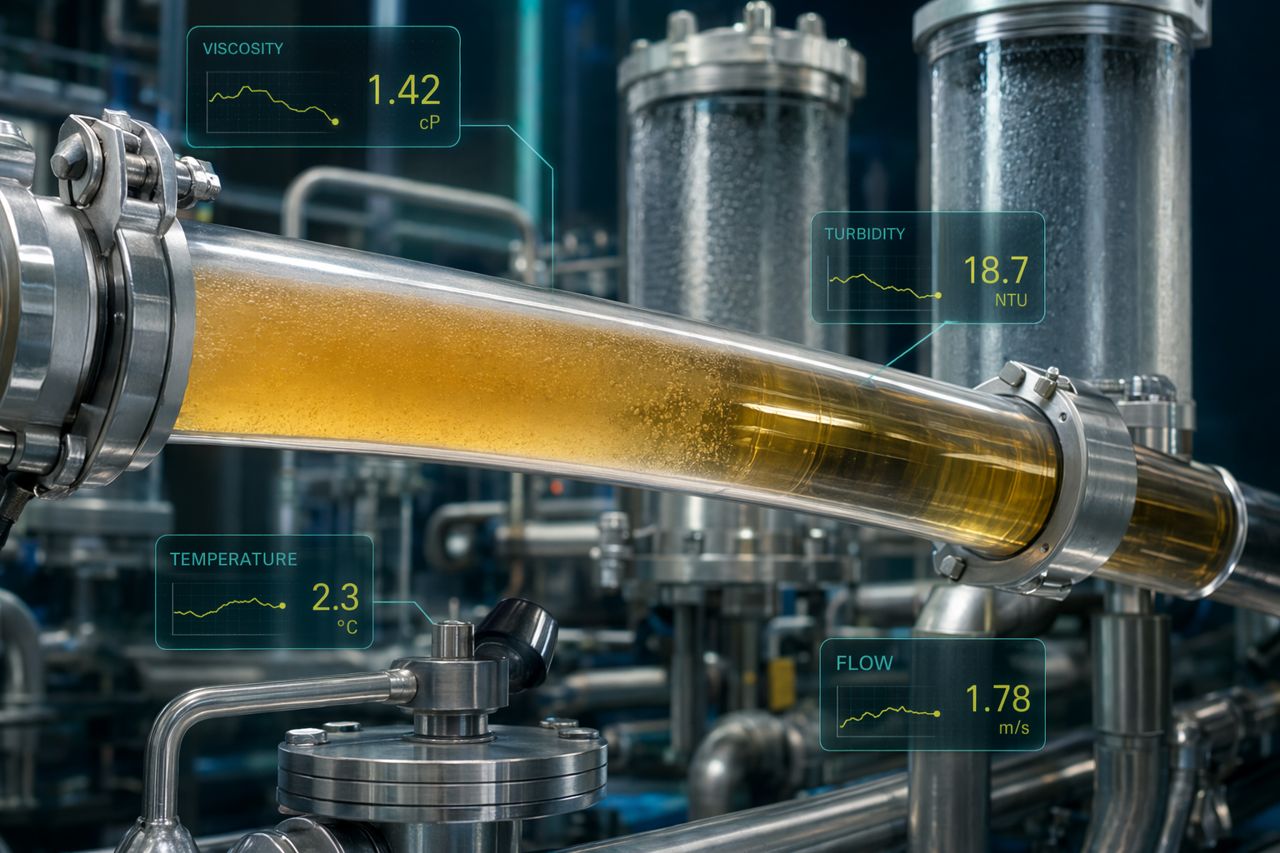
- High-viscosity extracts that reduce flow through filter media even when visible solids look manageable
- Poorly hydrated powders that continue swelling after blending
A filter does not see a beverage concept. It sees particle size, deformable solids, colloidal structure, viscosity, temperature, and pressure response.
If those are unstable, filtration becomes unstable.
Why More Hardware Does Not Always Fix the Problem
Increasing filter capacity can be the right capital decision when the feed stream is already well controlled. But if the beverage matrix is variable, more hardware may simply give the problem more surface area to foul.
Common signs that the bottleneck is chemistry-driven rather than hardware-driven include:
-
Fast early flow followed by sudden pressure rise
This often indicates compressible solids or colloids forming a dense cake layer. -
Batch-to-batch filtration variability with the same filter setup
Raw botanical variation, extraction severity, or powder hydration may be changing the load. -
Good lab clarity but poor plant throughput
Bench filtration can miss shear history, residence time, temperature drift, and scale effects. -
Filter media blinding before expected dirt-holding capacity
Fine plant fragments and gel-like colloids can seal pores quickly. -
High pressure without obvious sediment
Viscosity and soluble structure may be limiting flow more than visible particles.
Before adding equipment, define what is blocking the line.
Viscosity: The Hidden Filtration Tax
Viscosity is not only a mouthfeel parameter. It is a line-efficiency parameter.
In botanical beverages, viscosity can rise from soluble fiber, pectin, gums, starch fragments, plant mucilage, or extracted cell wall material. Even moderate increases can reduce flow, increase pressure, and extend filtration time.
The practical impact:
- Slower filter throughput
- Higher pump load
- Longer tank occupancy
- More frequent filter changeouts
- Reduced scheduling flexibility
- Greater risk of inconsistent fill timing
Enzymatic pre-treatment can help reduce targeted viscosity contributors before the filter sees them. The goal is not to strip body from the drink. The goal is to separate desirable mouthfeel from process-blocking structure.
For premium RTD beverages, that distinction matters.
Insoluble Solids and Plant Cell Debris
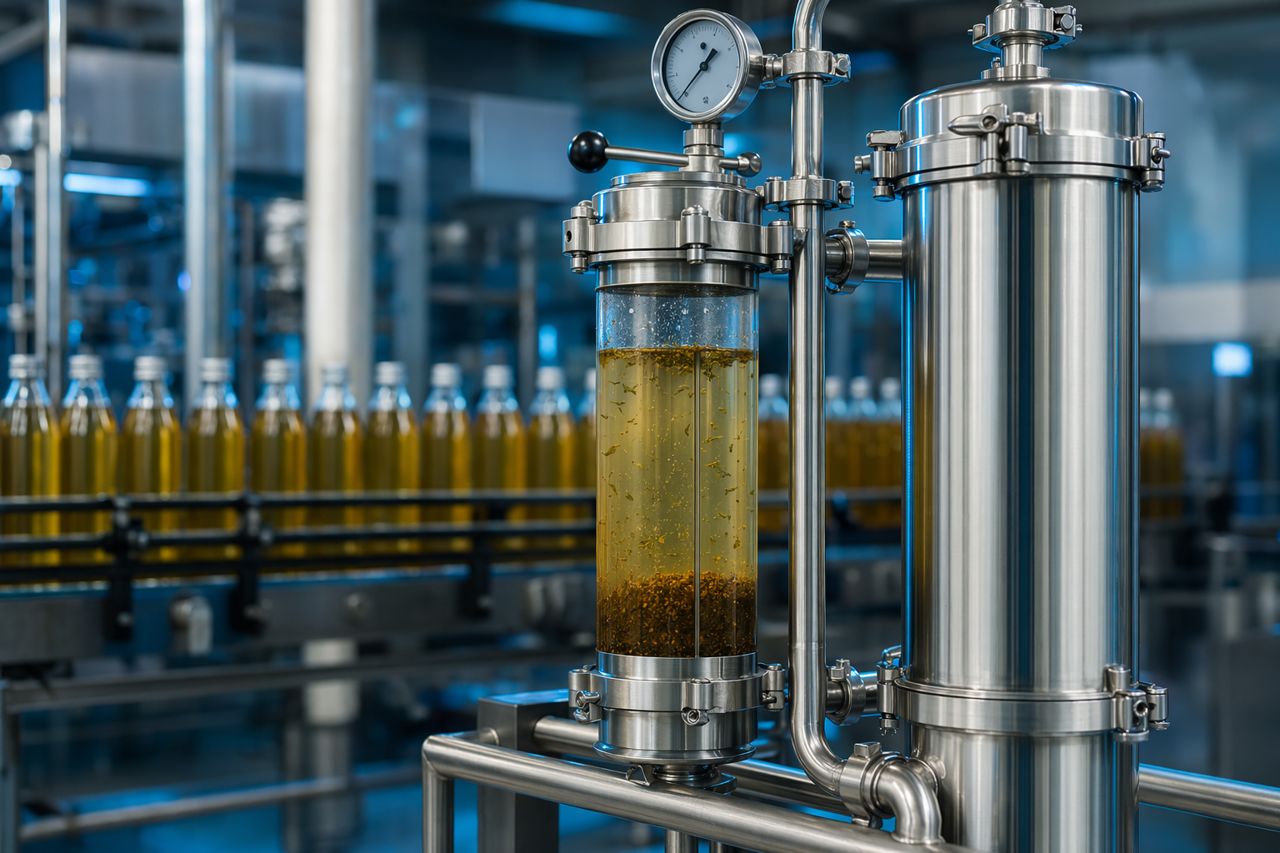
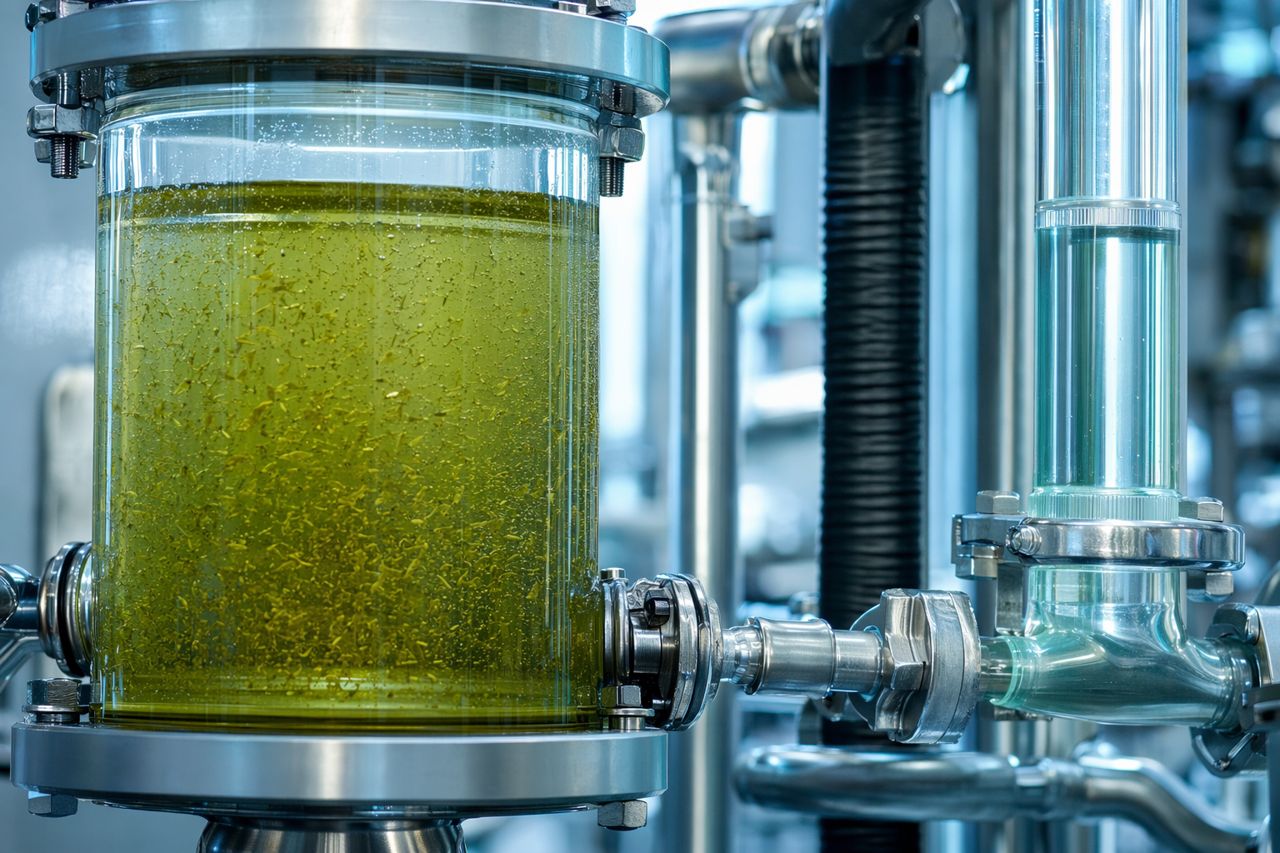
Tea leaves, herbs, spices, roots, fruit particulates, and botanical powders can carry a wide distribution of particle sizes. The most difficult fraction is often not the largest material that settles quickly. It is the fine, deformable fraction that stays suspended and packs tightly against filter media.
Sources include:
- Over-extraction or aggressive agitation
- Fine-cut botanicals
- Milling or powder handling variability
- Incomplete hydration before filtration
- Thermal processing that changes particle behavior
- Extraction conditions that release excess cell wall fragments
Enzyme selection can support cleaner separation by modifying plant-derived structural material before filtration. In the right application, this can improve liquid release, reduce suspended load, and support more predictable filter performance.
Colloids: Haze That Behaves Like a Process Problem
Not every filtration issue looks like sediment. Some bottlenecks come from colloidal systems: tiny structures that remain dispersed, interact with polyphenols or proteins, and build resistance under pressure.
In RTD tea and botanical drinks, colloidal instability can show up as:
- Persistent haze after filtration
- Chill haze after storage
- Slow pressure increase during filtration
- Cloud formation after acidification
- Turbidity drift after pasteurization
- Inconsistent color brightness between batches
This is where formulation, extraction, and enzyme pre-treatment need to be evaluated together. A beverage may look acceptable immediately after blending but behave differently after heat, hold time, acid adjustment, or cooling.
Enzymeforbeverages’s approach is to connect pre-treatment decisions to the finished product target: clear, cloudy, lightly opalescent, pulpy, or texture-forward.
Pre-Treatment Decisions That Affect Filtration
The strongest filtration improvements often come from controlling the beverage before filtration, not fighting it at the skid.
Key process variables to review
- Botanical cut size and incoming raw material variation
- Extraction temperature and hold time
- Agitation level and shear exposure
- pH before and after extraction
- Solids loading in the extraction vessel
- Powder hydration sequence
- Enzyme contact time within the process window
- Thermal step timing relative to pre-treatment
- Filter media selection and staged clarification strategy
Key formulation variables to review
- Tea type and polyphenol load
- Botanical blend composition
- Fruit or vegetable component contribution
- Added fiber, stabilizer, or texture system
- Sweetener system and dissolved solids
- Acidulant timing
- Mineral content and water profile
- Desired clarity or cloud position
The right enzyme strategy depends on both lists.
Where Enzymes Can Help in RTD Beverage Filtration
Enzymes are not a universal fix, but they are precise tools when the bottleneck is plant structure, viscosity, or colloidal load.
For RTD tea and botanical beverage manufacturing, enzyme-supported pre-treatment may help with:
- Viscosity reduction for better pumping and filtration flow
- Improved extraction yield from plant-based raw materials
- Reduced filter blinding caused by fine plant debris or gel-like structures
- Clarity improvement in clear tea, botanical, and functional beverages
- Mouthfeel control without relying only on mechanical separation
- Batch repeatability when raw botanical inputs vary
- Lower rework risk by improving upstream process control
The commercial value is not the enzyme itself. The value is a line that runs with fewer surprises.
What to Measure Before Changing the Filtration System
Before approving new filtration hardware, build a short diagnostic view of the beverage matrix.
Useful checks include:
- Flow decline profile across the filtration step
- Pressure rise pattern over time
- Turbidity before and after pre-treatment
- Viscosity trend through extraction and blending
- Settling behavior after hold time
- Particle load and visible sediment pattern
- Yield from extraction vessel to filtered beverage
- Temperature sensitivity of clarity and flow
- Batch variability across raw material lots
The goal is to identify whether the line is limited by media capacity, solids load, colloidal behavior, viscosity, or a combination.
Once the root cause is clear, enzyme pre-treatment can be evaluated against real production targets instead of trial-and-error filter changes.
A Practical Development Path
For a beverage plant, the best enzyme program is one that fits the process already in place.
A practical development path typically looks like this:
-
Define the bottleneck
Is the problem flow rate, clarity, filter life, yield, mouthfeel drift, or all of these? -
Map the beverage matrix
Identify the botanical inputs, pH range, thermal steps, solids loading, and desired final appearance. -
Screen targeted enzyme approaches
Focus on the structural contributors most likely driving viscosity, haze, or solids retention. -
Validate in process-relevant conditions
Match plant realities: temperature window, contact time, hold tanks, mixing, and downstream heat treatment. -
Confirm finished beverage quality
Check clarity, color, aroma impact, mouthfeel, sediment, and stability over intended shelf-life conditions. -
Scale with line efficiency in mind
Convert the lab result into a repeatable operating procedure for production teams.
That is the difference between an ingredient trial and a manufacturing solution.
Enzymeforbeverages Perspective: Treat the Cause, Not the Filter Alarm
A filtration alarm is usually a late signal. The earlier signals are in extraction behavior, viscosity build, colloid formation, and solids release.
For RTD tea and botanical drinks, the right enzyme pre-treatment can help convert a hard-to-filter liquid into a more predictable feed stream. That can protect filter capacity, improve clarity control, reduce cycle-time pressure, and make beverage quality easier to repeat.
If your plant is considering more filtration hardware because botanical or tea beverages are slowing the line, first ask whether the liquid can be made more filterable.
Request a Quote
Working on a tea, botanical, fruit-botanical, or functional RTD beverage with filtration pressure, haze, viscosity, or yield issues?
Use the on-site request a quote form and share your beverage type, process window, clarity target, and current bottleneck. Enzymeforbeverages can recommend an enzyme pre-treatment direction aligned with your production goals.